Starlink Mini power: watts, USB-C PD and battery runtime
Research & procurement notes · DELTA V by Keisei
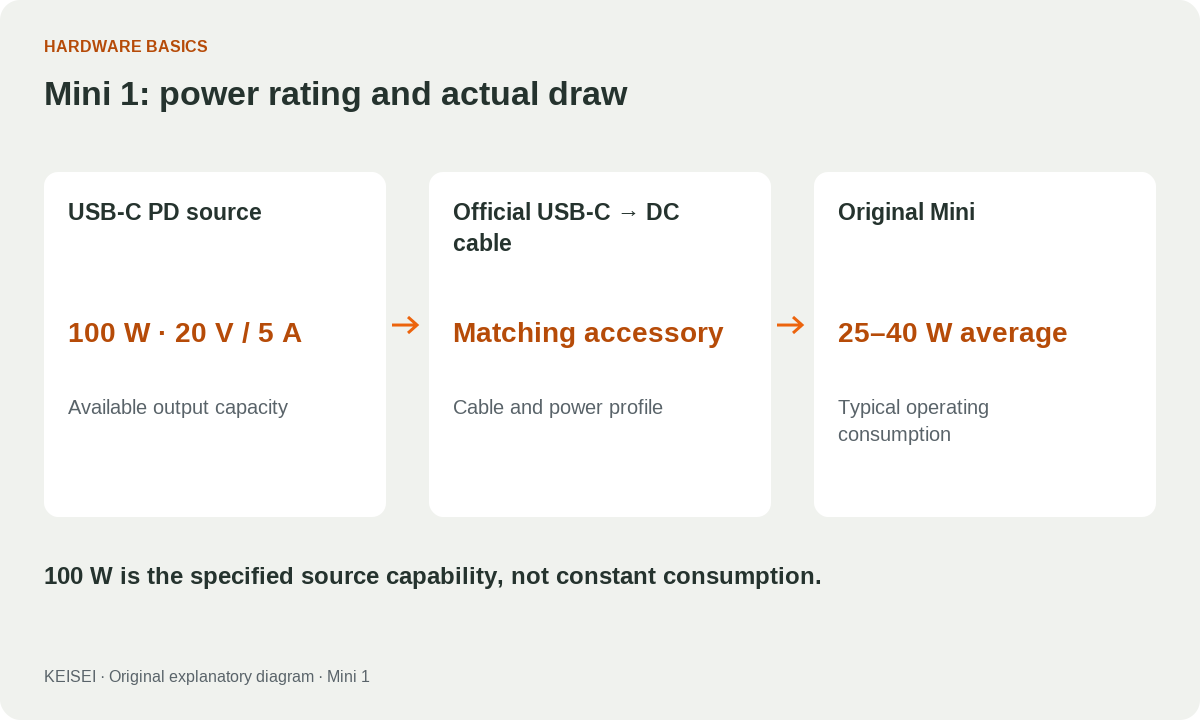
For the original Starlink Mini, the official specification lists 25–40 W average consumption. Its official USB-C-to-DC accessory requires a 100 W, 20 V / 5 A power source. The first number describes operating use; the second specifies the source capability for that accessory. It does not mean Mini constantly consumes 100 W.
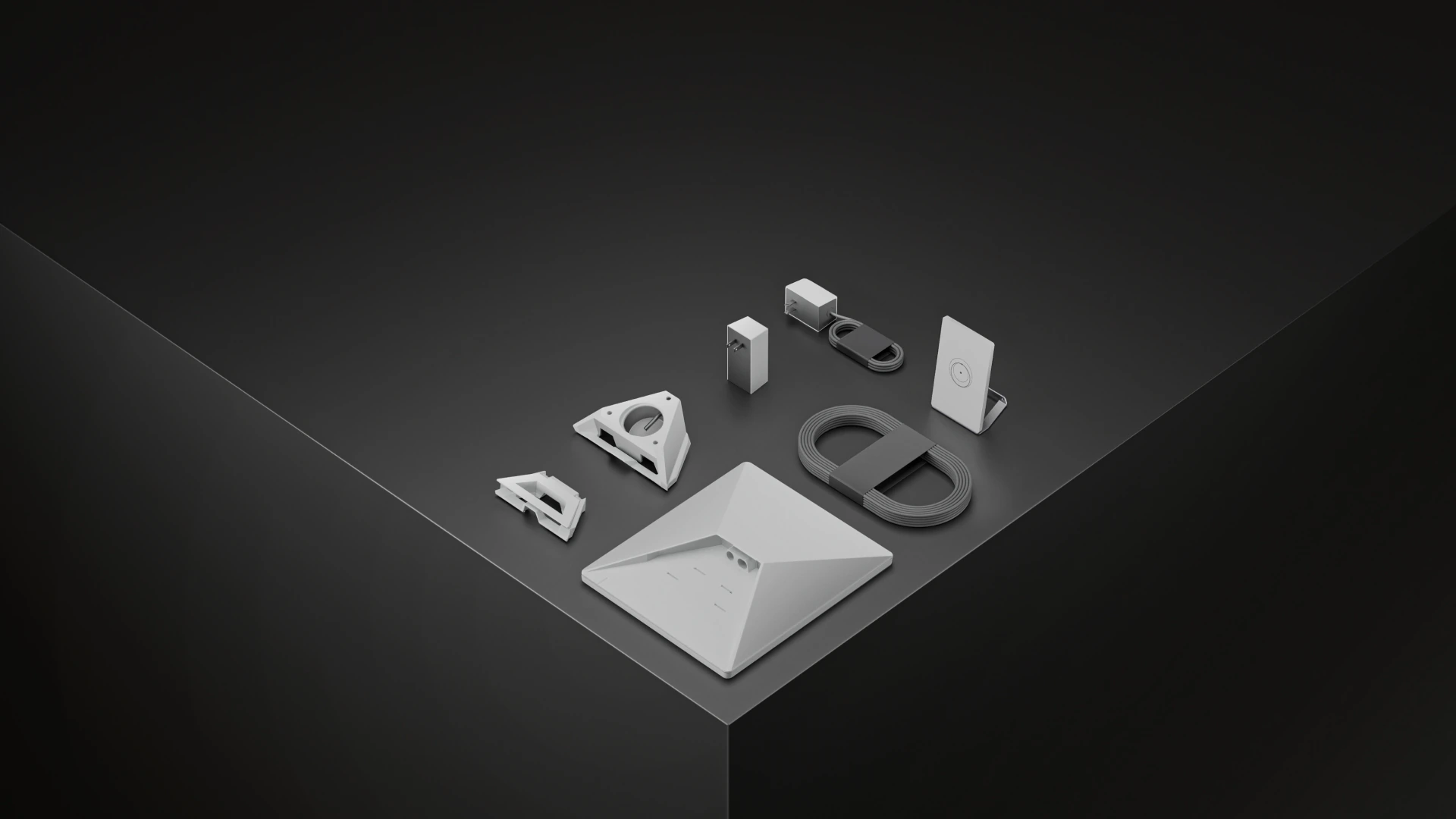
Original KEISEI diagram for Mini 1 and the official USB-C-to-DC accessory. Source rating and average consumption are separate specifications. This is not a Mini 2 wiring diagram.
Watts measure power; watt-hours measure energy
Watts (W) describe the rate of energy use or the output capability of a power source. Watt-hours (Wh) describe an amount of energy. A battery labelled 100 Wh is therefore not a “100 W battery runtime”: the duration depends on the actual load and how much of that energy reaches it.
Voltage and current provide another view of power: at a given DC output, volts multiplied by amperes give watts. The specified 20 V × 5 A profile equals 100 W. The figure must apply to the relevant output port and operating profile, not merely a headline number for an entire multi-port product.
USB Power Delivery allows equipment to request suitable power rather than treating every USB-C connection as the same supply. The output profiles, cable and connected equipment all matter. A supply’s capacity is not a command forcing the connected terminal to consume that amount continuously.
For this original-Mini setup, use the manufacturer’s stated 100 W / 20 V / 5 A source-and-accessory requirement as the reference. Regional Starlink help pages differ in how they describe lower-power limits. This guide does not turn those differing statements into a universal claim about whether every third-party supply can start the terminal.
How to estimate runtime without pretending it is a test
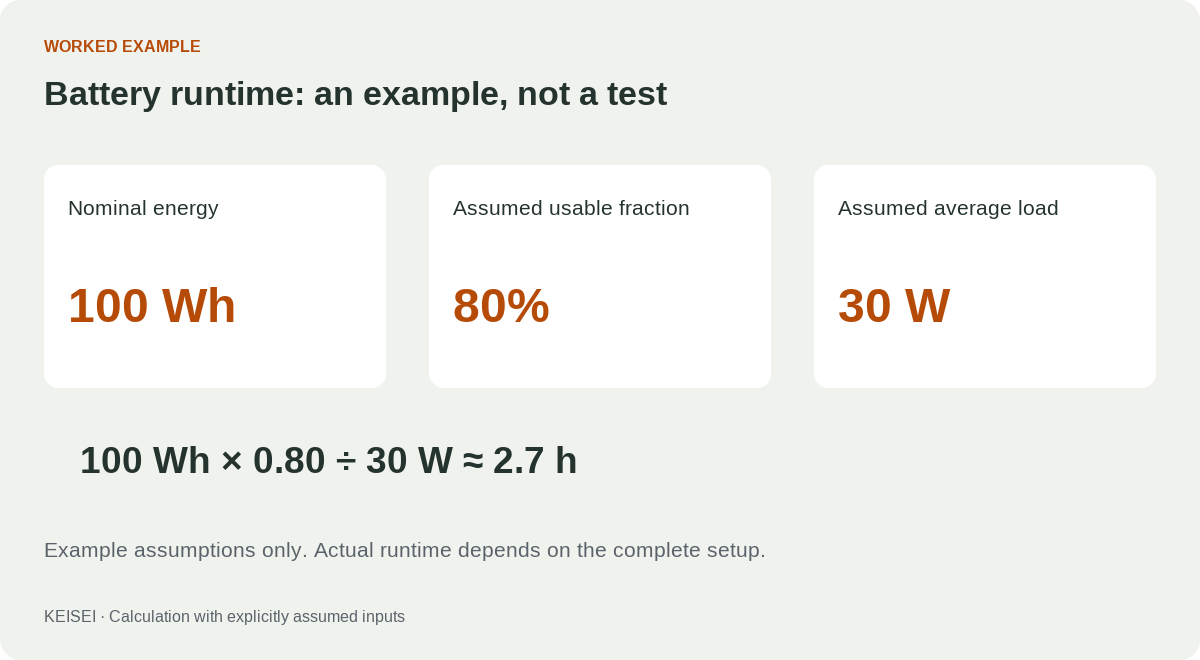
Estimated hours = nominal battery energy in Wh × usable fraction ÷ average load in W. Define the measurement boundary: if the load is measured at the terminal, the usable fraction must account for upstream conversion losses. Include any other devices supplied by the same battery.
For illustration only, assume a 100 Wh battery, 80% usable energy at the terminal and a steady 30 W average load. That gives 100 × 0.80 ÷ 30 ≈ 2.7 hours, or about 2 hours 40 minutes. Neither the 80% fraction nor that runtime is a measured result for a named product.
Actual demand and efficiency vary. Starlink’s Snow Melt pre-heat mode can increase consumption, so a fair weather estimate should not be reused as a guaranteed winter runtime. Validate the complete setup under its intended conditions.
An arithmetic example with explicitly assumed inputs. It is not a battery recommendation, a KEISEI measurement or a guaranteed Mini runtime.
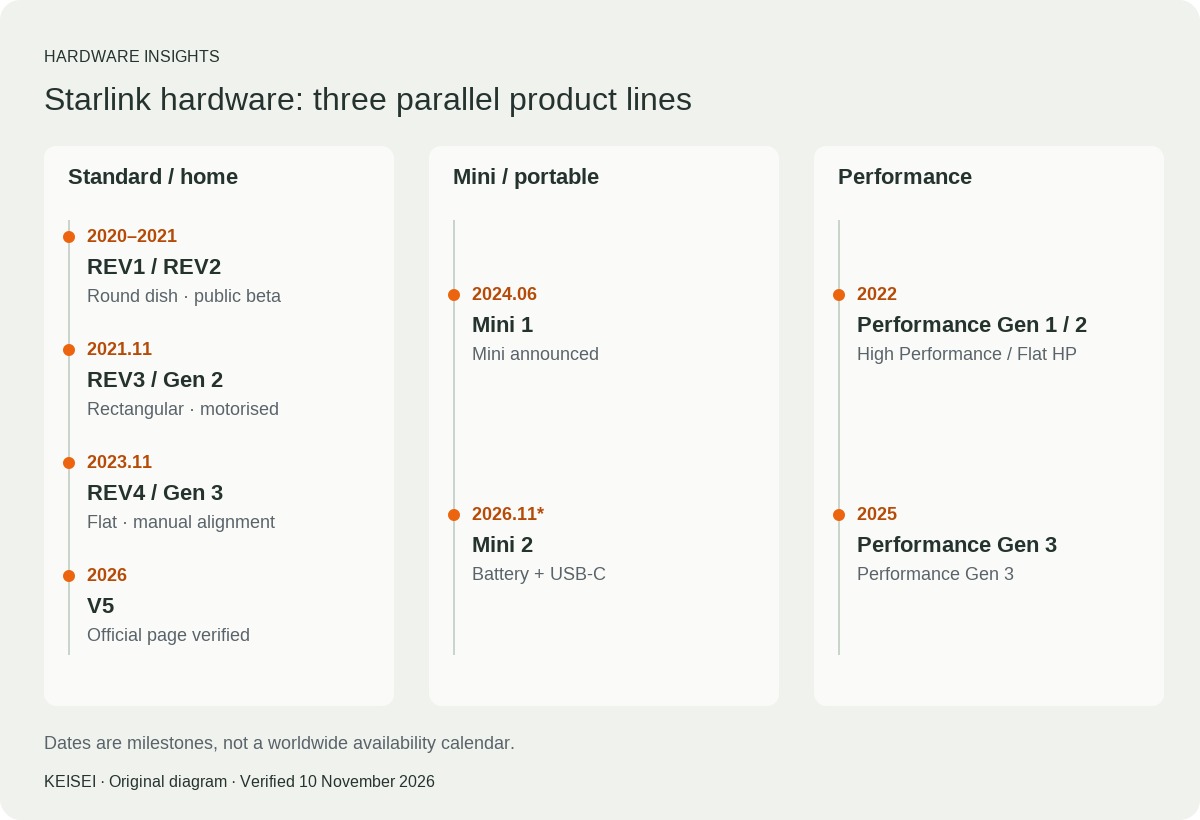
The official Mini 2 page describes a removable battery and 60 W USB-C charging, with advertised operation of up to 4.5 hours. Charging power and advertised runtime should not be read as a measured constant operating load.
The first Mini’s 100 W accessory requirement must not be copied into a Mini 2 table as though the connectors and supply arrangement were identical. Nor can a battery capacity for Mini 2 be calculated from “60 W × 4.5 hours”: charging power and runtime describe different conditions.
Record the exact terminal model, the power source’s output profile, the correct cable or accessory, the battery energy in Wh if applicable, and the expected load and conditions. For a multi-port power source, check the manufacturer’s allocation for the port and combination you will actually use.
Do not plan to power the original Mini through its Ethernet port: Starlink explicitly says it does not support PoE. Its Ethernet connection and separate power connection serve different jobs.
This is a KEISEI interpretation of the cited specifications and an illustrative calculation. We have not bench-tested a battery, charger or Mini 2 for this guide. A purchasing specification should identify a complete combination, not just a wattage printed on one component.
Checked 11 November 2026: Starlink publishes online specification tables for the terminal, battery and charger. We have not located a separate official Mini 2 specification PDF or installation manual in the public material checked. The first-generation Mini manuals are not Mini 2 documentation.
Official specifications, independent research and our purchasing guidance are identified separately. Oleg Kutkov is a cited independent researcher, not the author of this site. Rumours, when covered, are labelled unconfirmed and updated when primary evidence appears. Specifications and regional kit contents can change.
DELTA Vby Keisei Co., Ltd.
Hardware knowledge for better purchasing decisions.
DELTA V by Keisei Co., Ltd. connects hardware research with cross-border B2B sourcing. For model selection, regional configurations or a purchasing enquiry, contact our team.